By the Founders of CheckCells,
July 7, 2026
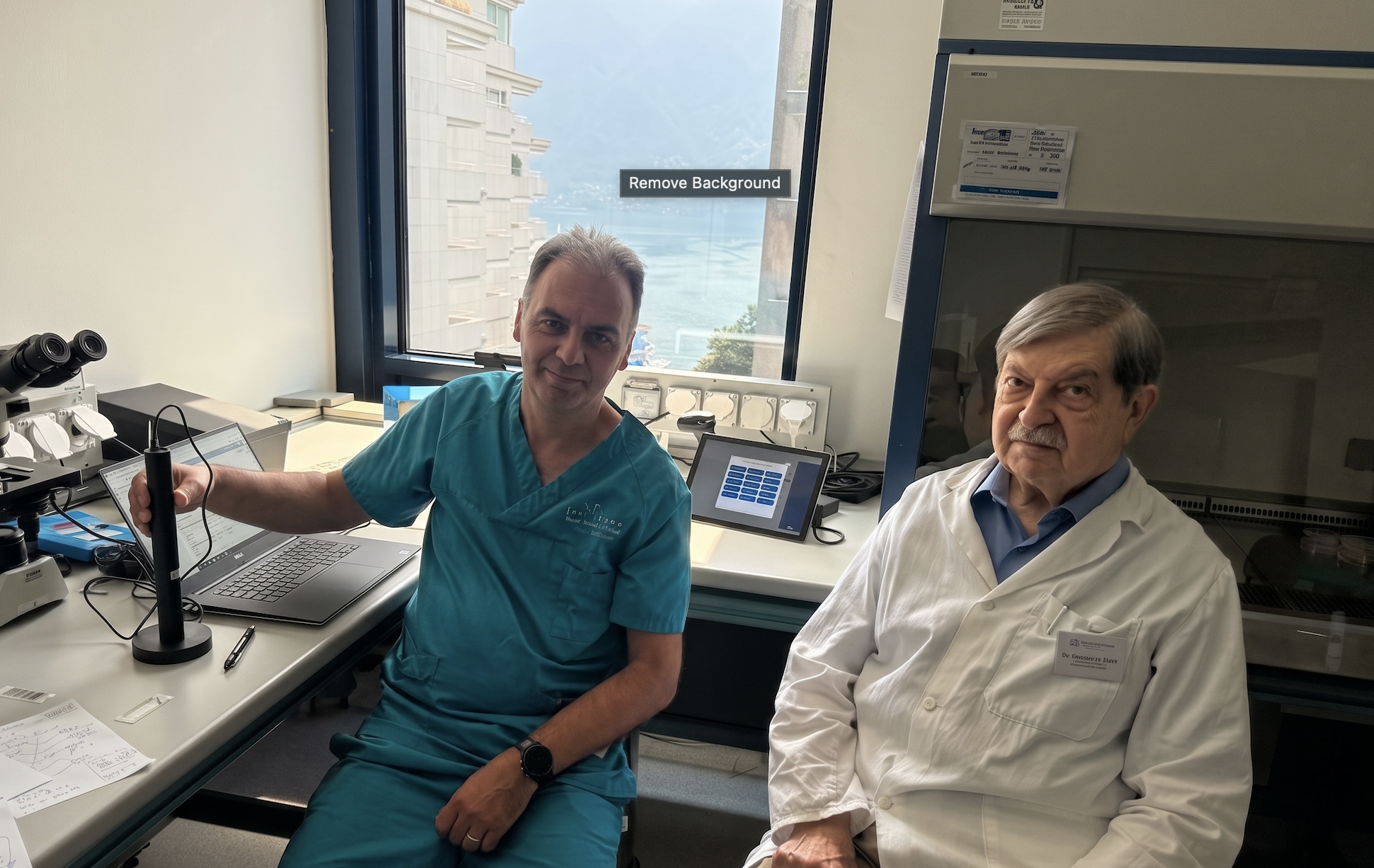
MicroTESE, being one of the most common treatments for NOA patients, is done manually across the board. This means it is prone to human error, and 3 out of 7 cases where there is sperm in the testicular tissue show a false negative (1). Further, only 45% of NOA patients undergoing micro-TESE are successful, with 13% of them actually reaching pregnancy (2). This makes the procedure high-stakes with a low probability of success.
Given that this procedure ranges between 10k and 30k per cycle in the US, it becomes important to get it right in as few trials as possible. Further, with each procedure, the patient’s risk of infection or health complications rises. This becomes emotionally, financially, and health-wise very costly if a mistake has been made. Given the difficulty of the sperm search, embryologists spend hours trying to find viable sperm, which increases the likelihood of making a mistake or missing a sperm.
Seaman Pro helps with the longest part of the multi-stage structure of the procedure. Inspired by a recent paper published in ASRM, computer vision was trained on 35,761 bright-field images from MicroTESE procedures of males with NOA, reaching an accuracy of more than 0.9 (1).
Our goal is to surpass manual evaluation by providing an efficient, reliable way of finding sperm where it is difficult to find, giving certainty and hope to patients who need this as a last resort for having a baby. Instead of an embryologist searching for viable sperm across tens of thousands of fields of view manually, we immediately mark where sperm is visible, speeding up the search by 40x and increasing the probability of making the procedure a success.
1) Practice Committee of the American Society for Reproductive Medicine. Fertility evaluation of infertile women: a committee opinion. Fertil Steril. 2022;117(6):1183-1195. doi:10.1016/j.fertnstert.2022.02.143.
2) Esteves SC, Roque M, Bedoschi G, Haahr T, Humaidan P. Intracytoplasmic sperm injection for male infertility and consequences for offspring. Nat Rev Urol. 2015;12(9):518-533. doi:10.1038/nrurol.2015.149.
Get the latest news directly to your inbox.
Your data security is our priority. CheckCells is SOC2 and GDPR compliant, and our optional Zero Retention Mode ensures none of your content or data are retained on our servers. End-to-end encryption further protects data sent to and from our models.